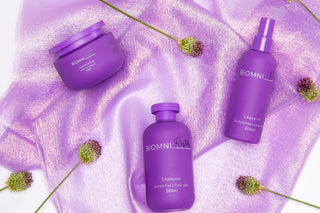

Low porosity hair is hair whose outer layer, the cuticle, lies flat and tightly closed. That tight seal is actually a sign of healthy, intact hair, but it comes with a frustrating side effect: moisture has a hard time getting in. Water beads up on your strands in the shower, products seem to sit on top of your hair instead of absorbing, and your hair takes forever to air dry. If that sounds familiar, you are not doing anything wrong, and your products are not necessarily bad. Your hair just needs a different approach: lightweight formulas, a clarifying cleanse, and a little warmth to help everything absorb. Here is exactly how it works.
What is low porosity hair?
Porosity describes how easily your hair absorbs and holds moisture. Picture the cuticle as roof shingles along each strand. On high porosity hair, the shingles are lifted or chipped, so moisture rushes in and rushes right back out. On low porosity hair, the shingles lie flat and tight, so moisture struggles to get in at all, but once it is in, it stays.
Two things worth knowing up front. First, porosity is mostly genetic. You did not cause low porosity hair with the wrong products, and you cannot permanently change it. Second, every texture can be low porosity: straight, wavy, curly, and coily hair can all have tightly closed cuticles. It is a strand trait, not a curl pattern trait.
How do I know if my hair is low porosity?
You probably already recognize the everyday signs:
- Water beads up on your hair before soaking in, like rain on a waxed car
- Products, especially rich creams and butters, sit on your hair and leave it coated or greasy rather than moisturized
- Your hair takes a very long time to air dry, sometimes most of a day
- Buildup happens fast, and your hair feels dull or weighed down soon after wash day
- Color and chemical treatments take longer to process
The popular float test (dropping a clean strand into a glass of water to see if it floats) can give you a rough hint, but it is not reliable on its own, because oils and buildup on the strand affect the result. The everyday signs above, observed over a few wash days, tell you more than any single test.
Why do products sit on top of low porosity hair?
Because the cuticle is sealed, heavy molecules simply cannot get through. Thick butters, heavy oils, and layered stylers have nowhere to go, so they stack up on the surface. That creates a frustrating cycle: your hair feels dry, so you add more product, which builds up, which blocks even more moisture, which makes your hair feel drier. Many people arrive at BiOMNI after years of that cycle, convinced their hair is impossibly dry, when the real problem was never a lack of product. It was product that could not get in.
The fix is to reverse the cycle: clarify away the buildup, then use lightweight, water-based moisture that can actually penetrate, and use gentle warmth to help it along.
What actually works for low porosity hair?
1. Start with a genuinely clean slate
Low porosity hair needs regular, thorough cleansing more than any other porosity type, because buildup is its natural enemy. A sulfate-free shampoo that lifts buildup without stripping is the right tool. One thing to expect: on the first wash, a sulfate-free formula may lather less while it works on the buildup, then lather noticeably more on the second wash. That is the process working, not the product failing.

Restore Moisture Cleanse Shampoo
Gently lifts buildup while restoring moisture, so the rest of your routine can actually reach your hair. Sulfate-free and formulated for every texture.
$38.00
Shop the Restore Shampoo2. Add warmth when you deep condition
Gentle heat is low porosity hair's best friend, because warmth encourages the cuticle to lift slightly and let moisture in. Apply your deep conditioner or mask to damp hair, then cover with a shower cap and sit for 15 to 30 minutes; the trapped body heat does the work. Warm water rinses beat cold ones for the same reason. This one habit often transforms how well a mask performs on low porosity hair.

Restore Conditioning Mask
A weekly deep treatment with baobab extract, collagen, and shea butter. Apply with a shower cap and let warmth carry the moisture in.
$46.00
Shop the Restore Mask3. Choose lightweight, water-based leave-ins over heavy creams
This is the biggest product swap for low porosity hair. Heavy butters coat; lightweight leave-ins absorb. Look for water-based formulas with humectants like panthenol, and with hydrolyzed proteins, meaning proteins broken into fragments small enough to slip beneath even a tight cuticle. Hydrolyzed rice protein and hydrolyzed keratin support strength from within the strand instead of sitting on top of it.

Restore Leave-In Conditioner
Lightweight daily moisture with panthenol and hydrolyzed proteins that absorb rather than coat. Hydrates and protects without the weighed-down feeling.
$28.00
Shop the Restore Leave-In4. Apply products to damp, warm hair, not dry hair
Low porosity hair accepts moisture best right after a warm shower, when the cuticle is at its most receptive. Apply your leave-in to damp hair in sections, smoothing it in with your palms rather than piling it on top. A little goes further than you think once it is actually absorbing.
Low porosity vs. high porosity: a quick comparison
| Low porosity | High porosity | |
|---|---|---|
| Cuticle | Flat, tightly sealed | Lifted, gapped, or damaged |
| Water in the shower | Beads up before absorbing | Soaks in instantly |
| Drying time | Very slow | Fast |
| Products | Sit on top, build up easily | Absorb fast but moisture escapes |
| What it needs | Clarifying, lightweight moisture, warmth | Rich sealing, protein repair, gentle handling |
Frequently asked questions
Is low porosity hair bad or unhealthy?
No. A tightly sealed cuticle is structurally healthy hair. Low porosity is a care challenge, not a damage state. Once your routine matches your porosity, this hair type holds moisture and shine exceptionally well.
Does low porosity hair need protein?
In the right form, yes. Large protein molecules can sit on the surface and leave hair stiff, which is where the "low porosity hair hates protein" idea comes from. Hydrolyzed proteins are small enough to absorb, and balanced formulas pair them with moisture so hair stays flexible as it strengthens.
How often should you wash low porosity hair?
Most people do well washing every 4 to 7 days. Because buildup is the main enemy, err on the side of washing slightly more often with a gentle, sulfate-free cleanser rather than stretching wash day and letting product accumulate.
Can hair porosity change over time?
Your natural porosity is genetic, but damage can raise it: heat, color, and rough handling lift the cuticle. That is why some people have low porosity roots and high porosity ends. Treat your ends more gently and trim regularly to keep the difference manageable.
How long until a new routine shows results?
Expect softness and easier detangling within the first 1 to 3 washes, and real changes in strength, elasticity, and moisture retention over 8 to 12 weeks of consistency. Healthy hair is a long-term investment, not a quick fix, and low porosity hair especially rewards patience.
The takeaway
Low porosity hair does not need more product. It needs the right product, applied the right way: a clarifying but gentle cleanse, warmth with your weekly mask, and a lightweight leave-in that absorbs instead of coating. That is the whole system, and it works on every texture. If you want to try it, join the BiOMNI Beauty Circle for 10% off your first order, and start with the routine your hair can actually absorb. Explore the BiOMNI routine here.