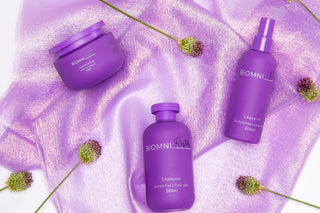

A simplified hair care routine has three steps: cleanse, treat, protect. That is it. Most routines stop working not because your hair changed overnight, but because products got stacked on top of each other without a plan, buildup went unaddressed, and steps got skipped when life got busy. Fixing it rarely means buying more. It means choosing the right three things and using them consistently.
In this article
- Why hair care routines stop working
- The 3-step system: cleanse, treat, protect
- Signs your routine has too many steps
- Complicated routine vs the 3-step system
- Does a simplified routine work for every texture?
- How to get started without overhauling everything at once
- Frequently asked questions
Why hair care routines stop working
Most routines are built on habit rather than function. A product gets added because a trend recommended it, another gets added to fix what the first one caused, and within a few months there is a five- or six-step routine that nobody fully understands anymore. Meanwhile hair is constantly reacting to product buildup, heat styling, environmental stress, and shifts in moisture and scalp balance. When results dip, the instinct is to add another product. Usually the fix is the opposite: strip back to what is actually doing the work.
Consistency matters more than step count. A tightly built three-step routine used every wash day will outperform a seven-step routine used inconsistently.

The 3-step system: cleanse, treat, protect
Every hair type and texture needs the same three functions, even if the products used to deliver them differ slightly by porosity and density.
- Cleanse: a sulfate-free shampoo that lifts buildup without stripping natural oils. Expect less lather on the first wash, since it is removing buildup rather than foaming for its own sake, and noticeably more lather on the second wash once that buildup is gone.
- Treat: a weekly deep conditioning mask that repairs and strengthens between washes. This is the step most routines skip when time is short, and the one that shows up first in reduced breakage when it is used consistently.
- Protect: a lightweight leave-in that seals in moisture and adds heat protection for daily styling, so the work done by the first two steps is not undone by a blow dryer or flat iron.
Moisture Cleanse Shampoo, Conditioning Mask, and Hydrating Leave-In, built to work as one system rather than three unrelated products.
Signs your routine has too many steps
A few patterns show up again and again in routines that have quietly grown past what hair actually needs: products purchased to fix a problem another product in the routine caused, more than one leave-in or styling product doing overlapping jobs, a cabinet where you could not confidently explain what each item is for, and results that used to be reliable but have become inconsistent for no clear reason. None of these mean your hair changed for the worse. They usually mean the routine has drifted away from a clear cleanse, treat, protect structure without anyone deciding that on purpose.
The fix is rarely dramatic. It is usually removing two or three products that duplicate a function another product already covers, and giving the remaining three room to actually do their job consistently.
Complicated routine vs the 3-step system
| Factor | Stacked, trend-led routine | Cleanse, treat, protect system |
|---|---|---|
| Number of products | 5 or more, often overlapping | 3, each with a distinct job |
| Consistency | Steps get skipped when busy | Easier to maintain every wash day |
| Buildup risk | Higher, more products layered | Lower, cleanse step addresses it directly |
| Works across textures | Depends on the specific products | Yes, the same three functions apply to every texture |
Does a simplified routine work for every texture?
Yes, though the emphasis within each step shifts. Curly and coily textures tend to run drier and generally need richer moisture in the treat and protect steps, with less frequent cleansing. Straighter textures tend to get oily faster and often do better with more frequent, lighter cleansing. The three-step structure does not change, only how often and how richly you apply each step changes.
Colour-treated, relaxed, heat-styled, and protective-style routines all fit inside the same framework too. The system is the constant. The product richness and wash frequency are the variables you adjust for your specific hair.

A weekly deep treatment for intense repair, the step most people skip and the one that matters most for breakage over time.
How to get started without overhauling everything at once
You do not need to replace your whole cabinet in one week. Start with the step you are currently missing. If you already condition and style but skip a weekly treatment, add the mask first. If your routine is a pile of products with no clear cleanse step, start there. A MINI-sized bundle is a reasonable way to test the full three-step system before committing to full sizes, especially if you have been burned by routines that promised more than they delivered before.
Give it time before judging results. Softer, more hydrated hair and easier detangling are usually noticeable within the first one to three washes. The structural changes, meaning real improvements in strength, elasticity, and reduced breakage, tend to show up over eight to twelve weeks of consistent use. This is a long-term investment in healthier hair, not a quick fix, and results vary by hair condition, density, and styling habits.
Frequently asked questions
Why does my shampoo lather less on the first wash?
A sulfate-free shampoo often lathers less on the first wash because it is lifting buildup rather than stripping hair for foam. The second wash typically lathers noticeably more once that buildup is cleared, which is a sign the product is working, not a flaw.
Is there alcohol in BiOMNI products, and will it dry out my hair?
Drying alcohols like ethanol are different from conditioning alcohols like cetearyl and stearyl alcohol. BiOMNI uses conditioning alcohols, which support moisture rather than stripping it, as part of its ingredient transparency approach.
How long before I see results from a simplified routine?
Short-term softness and easier detangling are common within one to three washes. Structural improvements in strength and breakage generally take eight to twelve weeks of consistent use, and results vary by starting hair condition.
Do I need different products for curly versus straight hair in this system?
The three-step structure, cleanse, treat, protect, stays the same. What changes is richness and frequency: curlier and coilier textures usually need more moisture and less frequent washing, straighter textures usually need lighter products and more frequent cleansing.
What if I have color-treated or chemically processed hair?
The same three-step structure applies, with the treat step carrying more weight. Chemically processed and color-treated hair typically needs the weekly conditioning mask more consistently, since processing weakens the hair's structure in ways that daily conditioner alone does not fully address.
Healthy hair starts with three steps, not ten
Restore. Strengthen. Maintain. One system, built for every texture.
Shop the Beauty Bundle →10% off your first order when you sign up for the newsletter.