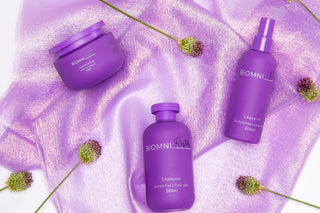

A protein treatment for hair is a conditioning product built around hydrolyzed proteins, most often keratin, collagen, or plant proteins like rice and baobab, that are small enough to bind to damaged spots along the hair shaft. Hair is roughly 90 percent keratin protein, and every round of color, heat, or tight styling chips away at it. A protein treatment patches those weak points, which makes hair measurably stronger, more elastic, and less likely to snap when you comb it. It is not a miracle fix, and it is not for everyone every week. Here is how to know if your hair needs protein, how to do a treatment at home, and how to avoid overdoing it.
In this article
- What does a protein treatment actually do?
- Does my hair need protein or moisture?
- How do you do a protein treatment at home?
- How often should you use a protein treatment?
- Do protein treatments work on natural hair?
- Frequently asked questions
What does a protein treatment actually do?
Think of the surface of a healthy hair strand as a tiled roof. Heat, bleach, chlorine, and friction lift and break those tiles, exposing the softer cortex underneath. Once the cortex is exposed, hair loses water quickly, stretches without bouncing back, and eventually breaks.
Hydrolyzed proteins are proteins broken into fragments small enough to slip into those gaps and bind there. Keratin reinforces the structure hair is already made of. Collagen supports strength and softness. Plant proteins like hydrolyzed rice protein improve resilience and manageability without stiffness, and baobab supports elasticity, which is your hair's ability to stretch and recover. The National Institutes of Health has published research showing hydrolyzed proteins can penetrate the hair shaft and improve its mechanical properties, which is exactly what you feel as less snapping and more slip.
What a protein treatment does not do: make hair grow faster, repair split ends that have already split, or transform hair overnight. With consistent use, most people notice softer, easier-to-detangle hair within 1 to 3 washes, and real structural improvements in strength and breakage over 8 to 12 weeks.
Does my hair need protein or moisture?
This is the question that decides whether a protein treatment helps or backfires. Hair needs both protein for strength and moisture for flexibility, and the fix depends on which one is missing.
| The test | Needs protein | Needs moisture |
|---|---|---|
| Stretch a wet strand | Stretches and stretches, feels gummy, snaps limply | Barely stretches, snaps immediately with a crack |
| How it feels | Limp, mushy, no spring, curls will not hold | Rough, dry, brittle, frizzy, tangles easily |
| Recent history | Color, bleach, relaxer, daily heat styling | Sun, chlorine, hard water, skipped conditioner |
If you land somewhere in the middle, you are in good company: most damaged hair needs both. That is why well-formulated treatments pair proteins with humectants and emollients like glycerin, panthenol, and shea butter, so strength and moisture arrive together instead of fighting each other.

Hydrolyzed keratin, collagen, and baobab for strength, with shea butter for moisture, so you never have to choose between the two.
How do you do a protein treatment at home?
You do not need a salon appointment. Salon protein treatments use stronger concentrations and are worth it for severe, bleach-level damage, but for maintenance and mild to moderate damage, a well-formulated at-home mask does the job for a fraction of the cost. Here is the routine:
Step 1: Start with genuinely clean hair
Proteins cannot bind to a strand coated in silicone film or styling product. Wash with a sulfate-free shampoo that lifts buildup without stripping moisture. Expect less lather on the first wash while it works through buildup, and noticeably more on the second. That is the formula working, not failing.
Step 2: Apply the treatment where the damage lives
Squeeze out excess water and apply the mask generously from mid-lengths to ends. The oldest hair is the most damaged hair, so concentrate there rather than the roots. Comb it through with a wide-tooth brush so every strand is coated.
Step 3: Give it time, not heat
Leave it on for 5 to 10 minutes. Longer does not mean stronger: proteins bind in minutes, and marinating for an hour mostly just costs you an hour.
Step 4: Rinse thoroughly and seal
Rinse until the water runs clean, then finish with a leave-in conditioner on damp hair. This seals the cuticle, adds slip for detangling, and gives you heat protection if you plan to style.
Step 5: Repeat weekly, then reassess at 8 weeks
Consistency beats intensity. One mask a week for 8 to 12 weeks will do more than a monthly marathon session, because hair health builds through repeated conditioning cycles and new growth.

Sulfate-free cleansing with hydrolyzed rice protein and pro-vitamin B5, so the treatment that follows can actually bind.
How often should you use a protein treatment?
More protein is not better protein. Hair that gets protein without enough moisture turns stiff, straw-like, and paradoxically more prone to breakage. Stylists call it protein overload, and it is the most common mistake people make once they discover protein works.
A simple schedule by damage level:
- Color-treated, relaxed, or heat-styled hair: a protein-rich mask once a week.
- Mild dryness or occasional styling: every 2 weeks, with a moisture-focused routine in between.
- Healthy, low-manipulation hair: once or twice a month is plenty.
If hair ever starts feeling stiff or rough after treatments, pause the protein for two weeks and lean on moisture. Formulas that build moisture in alongside protein, like a mask with shea butter or a leave-in with baobab and collagen, make overload much harder to reach, which is exactly why simplified routines outperform cabinets full of single-purpose products.
Do protein treatments work on natural hair?
Yes, and textured hair often benefits most. Curls and coils are naturally drier because scalp oils travel slowly down a curved shaft, and the manipulation of detangling, twisting, and protective styling adds mechanical stress that protein helps hair withstand. Protein treatments are also a staple for anyone transitioning from relaxed to natural, because they reinforce the fragile line where two textures meet.
The same rules apply across every texture: assess protein versus moisture first, treat weekly at most, and always follow with moisture. Fine, straight hair benefits too, it just reaches protein overload faster, so lean toward the every-2-weeks schedule.

Daily lightweight moisture, detangling, and heat protection with baobab, collagen, and shea butter. The seal after every treatment.
Frequently asked questions
What does a protein treatment do for your hair?
It deposits hydrolyzed proteins into weakened areas of the hair shaft, reinforcing structure, improving elasticity, and reducing breakage. Expect softer, easier-to-manage hair within 1 to 3 uses and stronger hair with less breakage over 8 to 12 weeks of consistent use.
Is an at-home protein treatment as good as a salon one?
For maintenance and mild to moderate damage, yes. Salon treatments use stronger concentrations and make sense after major bleach or chemical damage. A quality at-home mask used weekly is more effective for most people than an occasional salon visit, because consistency is what rebuilds hair over time.
Can you use a protein treatment on colored hair?
Yes, and colored hair is one of the best candidates, since coloring lifts the cuticle and removes protein. Proteins help the cuticle lie flat again, which also helps color look vibrant longer. Use a color-safe, sulfate-free shampoo alongside it.
How do I know if I have protein overload?
Hair feels stiff, dry, or straw-like, loses its natural movement, and snaps quickly when stretched. Stop protein products for two to three weeks, focus on moisture, and reintroduce protein at a lower frequency.
What ingredients should I look for in a protein treatment?
Look for the word "hydrolyzed" before the protein: hydrolyzed keratin, hydrolyzed rice protein, hydrolyzed collagen, or hydrolyzed baobab extract. Unhydrolyzed proteins are too large to penetrate the strand. A good formula pairs them with panthenol, glycerin, or shea butter for the moisture side of the balance.
Restore. Strengthen. Maintain.
One shampoo, one mask, one leave-in. A complete protein and moisture routine for every texture, built to show real results by week 12, not empty promises by tomorrow.
Shop the Restore Routine →Join the BiOMNI Beauty Circle for 10% off your first order.