
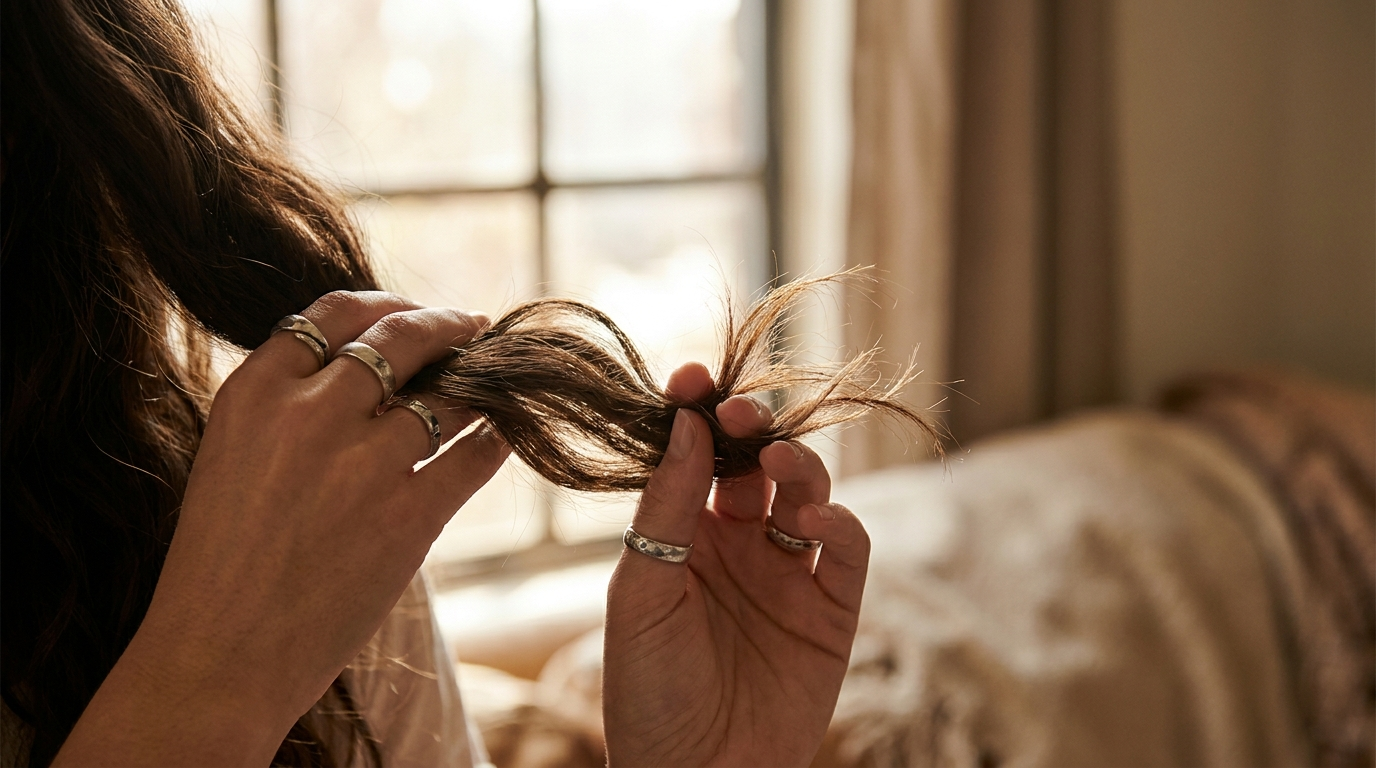
Hair breakage is when strands snap along their length and leave short, uneven pieces, split ends, and flyaways that never seem to grow past a certain point. It happens when hair loses moisture and strength faster than it can rebuild, usually from a mix of dryness, heat styling, color or chemical processing, washing with stripping products, and rough handling. The fix is not one miracle product. It is restoring moisture, rebuilding strength with proteins, protecting hair from heat and friction, and staying consistent. Most people notice softer, easier-to-detangle hair within the first one to three washes, while real gains in strength and reduced breakage build over eight to twelve weeks of steady use.
Here is what is actually causing it, how to stop it, and how the approach shifts across hair types.
In this article
- What is hair breakage, and how is it different from shedding?
- What causes hair breakage?
- How do you prevent and stop hair breakage?
- Does hair breakage differ by hair type?
- How long does it take to repair hair breakage?
- FAQ
What is hair breakage, and how is it different from shedding?
Breakage and shedding look similar in the sink, but they are not the same thing. Shedding is a whole strand leaving from the root, often with a small white bulb on the end, and losing some hair this way every day is completely normal. Breakage is a strand snapping somewhere along its length, so you see short broken pieces, split ends, and little white points where the strand gave out. A quick test: new growth tapers to a fine point at the tip, while a broken hair has a blunt, uneven end. If your lengths feel rough, your ends look wispy, and you have flyaways that stick straight up, that is breakage, not new growth.

What causes hair breakage?
Breakage is almost always a combination of factors rather than a single villain. The most common causes are:
- Dryness. Hair that lacks moisture loses flexibility, so it snaps instead of bending. This is the root cause behind most breakage.
- Heat styling. Repeated blow-drying, flat ironing, and curling without protection weakens the cuticle and dries the strand out.
- Color and chemical processing. Coloring, relaxing, and other chemical services weaken the internal bonds and reduce elasticity, which leaves hair more fragile.
- Stripping products. Harsh sulfate shampoos and drying alcohols pull moisture out of the hair, so it never gets the chance to recover between washes.
- Rough handling. Aggressive detangling, brushing dry hair from the roots down, and tight styles put mechanical stress on the strand until it breaks.
- A protein and moisture imbalance. Hair needs both. Too little of either leaves it either brittle or limp, and both states break.

How do you prevent and stop hair breakage?
Stopping breakage means giving hair back its moisture and strength while taking away the things that stress it. Five steps cover almost everything:
- Cleanse without stripping. A sulfate-free shampoo lifts buildup without pulling out the moisture hair needs to stay flexible. It lathers less on the first wash because it is cleaning rather than stripping, and more on the second.
- Deep-condition for strength and moisture. This is the heart of repair. A treatment mask with hydrolyzed rice protein and keratin reinforces the strand, baobab extract supports elasticity so hair bends instead of snapping, and collagen and shea add softness and moisture.
- Protect every day and before heat. A lightweight leave-in locks in moisture, smooths the cuticle, and adds a layer of heat protection before you style.
- Detangle gently. Work on damp, conditioned hair, start at the ends, and move up. A proper detangling brush reduces the tugging that snaps fragile strands.
- Be consistent. Breakage did not happen in a day and it does not reverse in one wash. The same steps, repeated over weeks, are what build measurable strength.
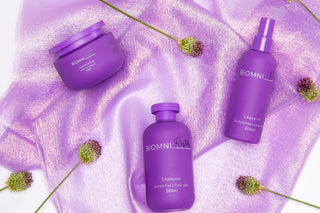
Deep hydration plus rice protein, keratin, baobab, and collagen to rebuild strength and support elasticity.
Does hair breakage differ by hair type?
The causes are the same, but the weak points and the routine shift with your texture. Breakage is a common concern across most hair types, so the approach should match yours.
| Hair type | Where breakage shows up | What helps most |
|---|---|---|
| Fine | Snaps easily, weighs down fast | Leave-in for lightweight strength, mask as a quick rinse |
| Thick | Dry ends, tangling | Deep hydration, a monthly steam treatment with the mask |
| Curly and coily | Dry points and tangles, shrinkage stress | Mask as a co-wash or curl cream, gentle detangling |
| Color-treated and chemically processed | Weakened bonds, lost elasticity | Sulfate-free washing, mask and leave-in every wash, monthly steam |
For curly and coily hair especially, the Conditioning Mask can do double duty as a co-wash between washes or as a curl and coil cream, which reduces the need for gels and heavy sulfate or alcohol-based products that dry hair out and cause more breakage. The Restore range is formulated to work across straight, wavy, curly, coily, fine, thick, color-treated, and relaxed hair, so the same simple routine adapts to your texture rather than asking you to start over.

Lightweight daily moisture, smoothing, and heat protection that works across every texture.
How long does it take to repair hair breakage?
Healthy hair is built with consistency, not overnight. In the first one to three washes, most people notice softer, more hydrated hair that detangles more easily, which immediately means less breakage at the brush. The deeper changes, more strength, better elasticity, and fewer strands snapping, build over roughly eight to twelve weeks of consistent use. Existing breakage will not magically reseal, that hair grows out, but the new length comes in stronger and the snapping slows down. Think of it as a long-term investment in healthier hair rather than a quick fix. The simplest way to stay consistent is the full three-step routine, and the Babe Bundle adds the detangling brush that keeps fragile strands from snapping in the first place.

Shampoo, Conditioning Mask, Leave-In, and the Detangling Brush. Every step that fights breakage, in one set.
Frequently asked questions
What is hair breakage?
Hair breakage is when a strand snaps along its length rather than falling from the root. You see short broken pieces, split ends, and white points where the strand gave way, usually because the hair has lost moisture and strength.
What causes the most hair breakage?
Dryness is the biggest driver, made worse by heat styling, color and chemical processing, stripping sulfate products, and rough handling. Most breakage is a combination of these rather than a single cause.
Can stress cause hair breakage?
Stress is more closely linked to shedding than to breakage, but it can affect the overall health of your hair and scalp. Protecting strands with moisture, gentle handling, and heat protection is the part within your control.
Is some hair breakage normal?
A little breakage happens to everyone. The goal is not zero broken strands, it is reducing excessive breakage so your hair can retain length and feel stronger over time.
How often should I use a hair mask for breakage?
Most hair benefits from the Conditioning Mask on every wash day, with a longer steam treatment about once a month for thick, coily, color-treated, or chemically processed hair that needs extra repair.
Restore. Strengthen. Maintain.
Less breakage starts with moisture and strength, built consistently. Join the newsletter for 10% off your first order.
Shop the Babe Bundle →Clean Beauty Certified. Sulfate-free. For every texture.